
The Recipe for Community Engagement in Residential Recycling
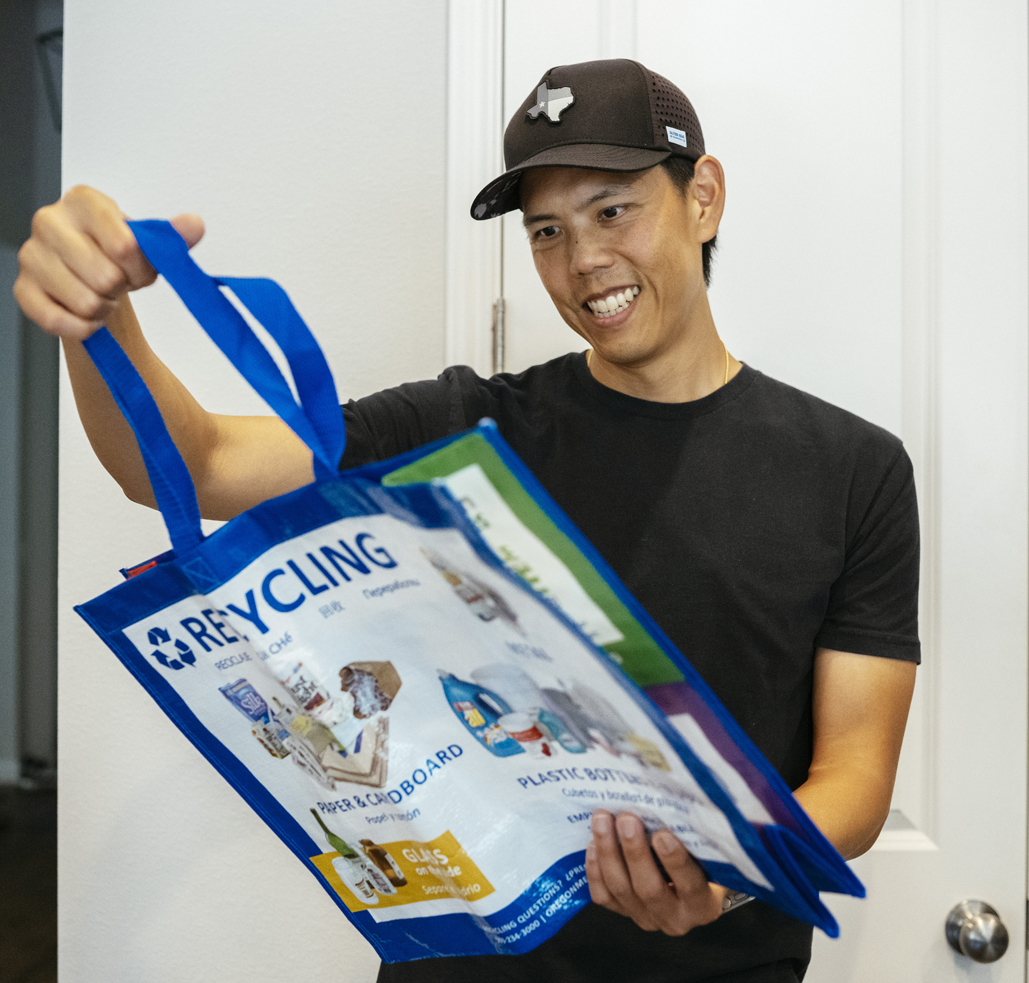
Residential recycling works better when engagement is built for how people actually live.
The Recycling Partnership has invested for more than a decade in recycling infrastructure nationwide. That work gives us real-world insight into how access, equipment, and resident engagement drive what households actually recycle.
That’s why we created our recipe — an evidence-based framework for behavior change in residential recycling programs — so more materials are recycled and fewer end up in landfills.
Why Recycling Behavior Change Is the Multiplier for Recycling Performance
Across the U.S., the system loses too much value: 79% of recyclables still end up in landfills.
Communities are working toward sustainability goals and zero waste while managing rising waste management pressures and tight budgets. The fastest way to protect the system’s bottom line is to reduce confusion, increase participation, and keep usable material moving through recycling systems.
Our recipe for recycling helps program teams strengthen participation through practical tools, clear messaging, and measurable field tactics. It was built from years of research, pilots, and performance measurement, including hands-on testing in more than 240,000 households.
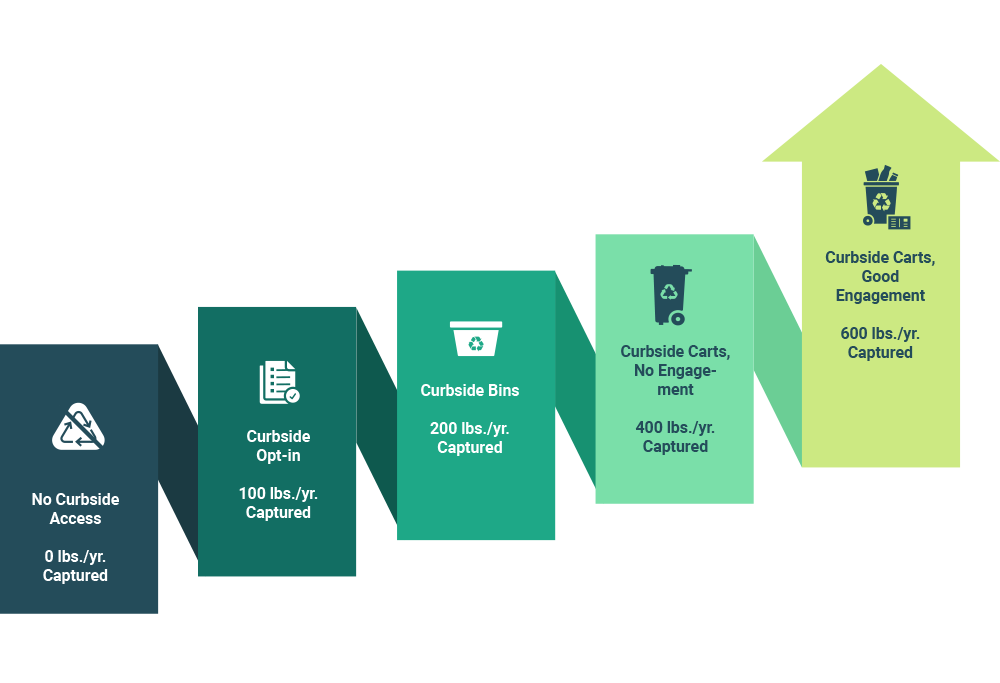
But even with strong systems in place, households still fall short of capturing the full volume of recyclables available, roughly 705 pounds per year for a typical single‑family home. To close that final gap, engagement becomes the catalyst. Helping residents understand what, when, and how to recycle is essential to driving the behavior that maximizes recovery.
The Recipe: 4 Proven Drivers of Recycling Participation
- Access
- Ease
- Appeal
- Norm

Click for more
Deliver convenient recycling access to every household, everywhere—across geographies, housing types, and income levels.

Click for more
Make recycling as simple as trash: clear steps, timely prompts, and tools that fit real household routines.

Click for more
Create a compelling, consistent hook, personal, trustworthy, and motivating, so recycling feels meaningful and worth doing.

Click for more
Make recycling visible and shared, showing people they’re part of a growing movement, not acting alone.
From Strategy to Street-Level Results
Our recipe translates to field practices that work across housing types and collection models. Below are some common starting points.
Cart Tagging Programs (Single-Family)

Container Inspections (Drop-Off, Multifamily)

Container and Signage Standardization
Multifamily Recycling Best Practices