
State of Recycling 2026
This is the nation's leading resource on the U.S. residential recycling system, released in phased installments and grounded in data from 9,000+ recycling programs serving 97% of the U.S. population.
Sign Up for 2026 State of Recycling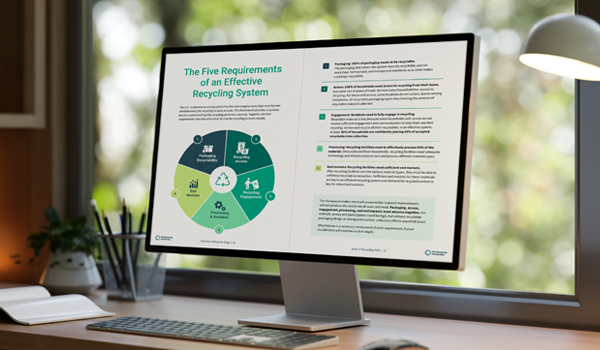
Where the U.S. Recycling System Stands and What It Will Take to Move It Forward
The Recycling Partnership’s State of Recycling Report draws on the National Recycling Database, multi-year field measurement studies, capture rate analyses, and the Recycling Confidence Index to produce the most comprehensive, data-driven assessment available of actual U.S. residential recycling performance.
This year, we’re releasing the report in phased installments. Each one examines a specific dimension of the system, grounded in current data and built for the people closest to the work: brands, supply chain partners, policymakers, community leaders, and recycling professionals.
Packaging design, household access, resident participation, processing infrastructure, and end-market demand remain disconnected in too many places. This report maps those disconnections, tracks where momentum is building, and identifies what coordinated action can unlock.
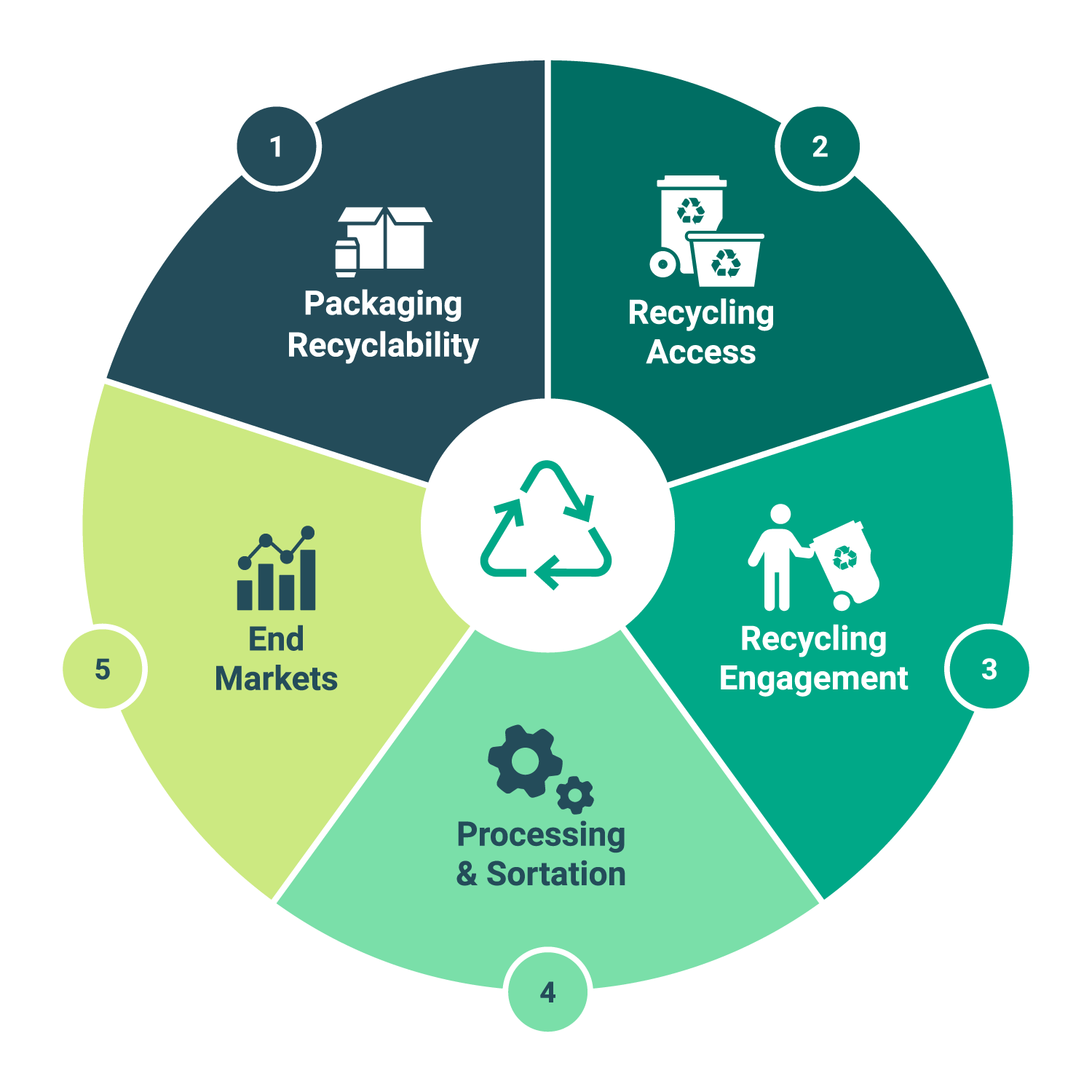
Five Requirements That Must Work Together
For recycling to function at a national scale, five requirements must be met simultaneously. Fall short on one, and the others underperform.
-
- Packaging must be recyclable
- All households must have access
- Residents must fully engage
- Facilities must process material effectively
- End markets must be sufficient and resilient
Future installments will examine these requirements in depth. The introduction assesses all five at a summary level and frames the current state of the system.
Now Available
Installment Two: The Evolving Ton
Residential Generation Data | September 2026
This installment examines residential packaging and printed paper generation data, revealing a recycling stream that is becoming lighter, more varied, and more operationally complex. It tracks significant shifts across 16 material categories and, for the first time, estimates the broader residential packaging and printed paper discard stream—including materials outside traditional collection. The findings provide a clearer view of the changing material mix and its implications for collection, MRF operations, end markets, resident engagement, measurement, and the investments needed to recover more material.
Four Things Are Clear

The Five Requirements are Interdependent
Recycling system performance depends on all five requirements working together—progress in one area cannot overcome gaps in another.

The System Lacks Economic Foundation
Without strong demand alongside complementary policy, recycling system improvements risk increasing supply without creating lasting outcomes.

EPR Represents a Significant Advance
EPR creates a stronger foundation for recycling, but realizing its full potential depends on prioritizing household participation alongside system improvements.

Outcomes are Tied to Public Trust
Lasting progress requires a recycling system that strengthens public confidence, sustains participation over time, and consistently delivers on the promise of recycling.
Register for the Companion Webinar Series
Live sessions that go deeper on each installment as it's released.
Companion Webinar
Installment Two Deep Dive: The Evolving Ton
The residential packaging and printed paper stream is changing. The Evolving Ton shows how the material mix is becoming lighter, more varied, and more complex to manage. This webinar explores what those shifts mean for recycling investment, domestic supply chains, U.S. manufacturing, and the jobs and economic activity they support.
Sign up to receive this installment and every future release.
Up Next: 2026 State of Recycling Installment Three
Sign up to receive each installment of the 2026 State of Recycling as it’s released, along with supplementary data and analysis. You’ll also get immediate access to every installment published so far.
About This Report
The State of Recycling Report is produced by The Recycling Partnership. It draws on the National Recycling Database, multi-year field studies, and the Recycling Confidence Index. The Partnership has spent more than 12 years working across the U.S. recycling system with communities, companies, and policymakers. This report reflects that depth: insight from inside the system, not outside analysis.
Questions or press inquiries: Contact Us