


Every effective recycling program starts with the right ingredients. The Recycling Partnership’s Recipe for Recycling Behavior Change identifies four proven drivers: Access, Ease, Appeal, and Norm. Our behavior change strategies put those ingredients to work through practical, research-backed approaches to improving recycling participation and material recovery.
“Feet on the Site” Resident Engagement at Drop-Offs
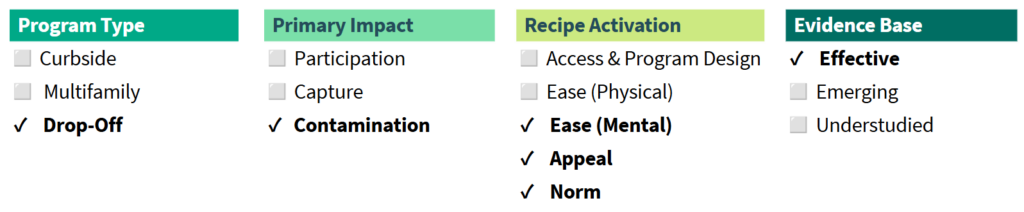
This comprehensive strategy combines on-site signage improvements, direct mail to households, and face-to-face resident engagement at the drop-off to provide contamination feedback and gather resident insights via survey work.
RESEARCH OUTCOMES
What’s Known & Why This Works
- The Partnership’s “Feet on the Site” drop-off recycling contamination reduction strategy has been implemented at multiple sites nationwide, with results consistently showing that it helps kick-start a better-quality material stream and provides a more user-friendly experience for residents.
- Proven results from implementing this process include decreases in overall contamination, illegal/illicit dumping, and occurrences of the most problematic contaminant, while increasing resident participation.
- Clear and simple signs help everyone know what to do, regardless of language barriers. Engaging with visitors to the drop-off site enables real-time monitoring, feedback, data collection and site maintenance.
- Pairing this with direct mail outreach continues to educate residents on acceptable materials, site locations, protocols, and preparation steps, and motivates participation.
Behavior Impact
-
20% – 45% reduction – greater reduction in contamination when recommendations were followed more diligently.
Estimated Cost Per Site
- $10,000-15,000/site and includes mailers, container signage, and resident engagement.
IMPLEMENTATION GUIDANCE
Recommended Process
- Install clear and consistent signage for collection containers.
- Update information on your website and social media.
- Send an infocard mailer with basic yes/no materials, site locations and hours of operation, and ensure content matches your website (one infocard per year is recommended at a minimum).
- Using site staff or volunteers, provide feedback to users of the drop-off on-site, promptly addressing contamination.
- Survey visitors to the site to gather data on participation, demographics and contamination observed. Use data gathered from your survey tool(s) to tailor communication and outreach to households (e.g. message about most common contaminant and/or where it can be taken for proper disposal, etc.).
Things to Consider
- Security measures contribute to long-term contamination reduction: cameras, fencing, lighting, permanent staff.
- Target your most problematic contaminant by posting eye-catching temporary signage at your site.
- Saying “no” to certain items does not discourage overall recycling participation. Where this kit has been deployed, customer traffic stayed consistent and/or increased.
Measurement Recommendations
- Good: Contamination rate (from MRF) and surveys of site visitors.
- Better: Add visual inspections via app or scheduled photographs to record a visual assessment of contamination, container volume, or changes in recycling quantity and/or quality.
- Best: Add drop-off visitation. Capture the number of residents using your drop-off site each day—with clickers, tally counters, cameras, traffic counters, or an app.